Extracting data from disclosure schedules
Seller's counsel prepares the disclosure schedules for every purchase agreement, one numbered schedule per representation, in an order the agreement dictates. Buyer's counsel, lenders and R&W insurers review each set as a PDF or Word file from the data room. A large deal's schedules can run past a hundred pages.
Reviewers extract each schedule's number and title with its contents: assigned contracts, excluded assets, insurance policies, intellectual property and pending litigation. Those lists feed the closing checklist and the diligence tracker, where each item is matched to the representation it qualifies.
What makes disclosure schedules hard
Dozens of separately numbered schedules
Each schedule is keyed to a section of the purchase agreement, such as Schedule 4.1(g), and its contents only make sense against that section.
A different shape per schedule
One schedule is a contract table with multi-line notice addresses. The next is a numbered list, and several say only "None" under the heading.
Long tables with wrapped cells
Patent and insurance tables use narrow columns. Application numbers and insurer names wrap across several lines inside a single table cell.
Parse, extract, verify
Parse
Parse turns the document into reading-order Markdown and a hierarchy of blocks (text, tables, figures), and grounds each block to its exact location on the page.
Extract
You define the fields in a JSON schema, and Extract returns their values in a consistent, structured format, each linked back to where it appears in the Markdown.
Verify
Each value links back to where it appears, down to the character range in the Markdown, and the page and bounding box in the source document, so every result can be verified.
One disclosure schedule, end to end
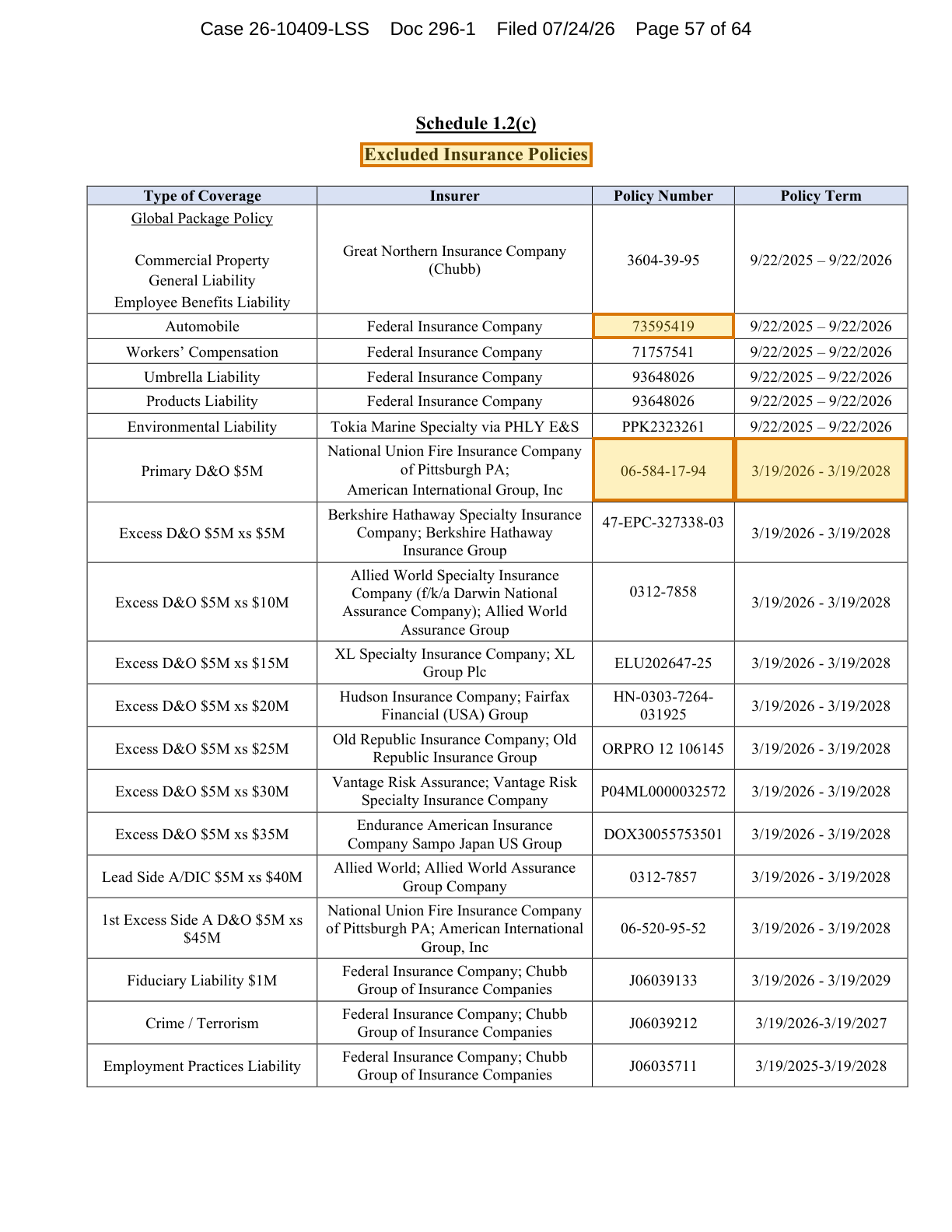
About this document: Disclosure schedules to an asset purchase agreement in a chapter 11 sale, filed with the bankruptcy court. A pharmaceutical buyer acquires assets from four biotech debtors. The 13 pages, trimmed from the full filing, cover assigned agreements, intellectual property, excluded insurance policies and the sellers' disclosures. Page 6 is featured. Three individual contacts in the notice addresses were replaced with fictitious names.
Processing objective: The objective is to capture the excluded insurance schedule as structured rows, each policy kept under its schedule number. A closing team uses it to confirm which coverage stays with the sellers, and each policy number and term grounds to its own table cell.
Demonstration fields: Schedule title, Primary D&O policy number, Primary D&O policy term, Automobile policy number
The document
4 of 13 pages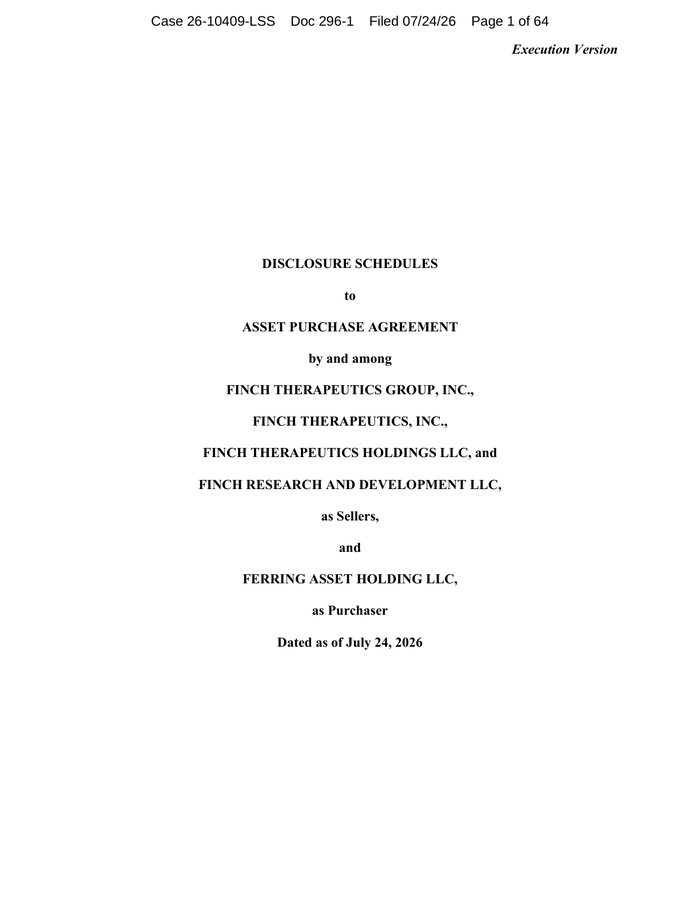 Page 1
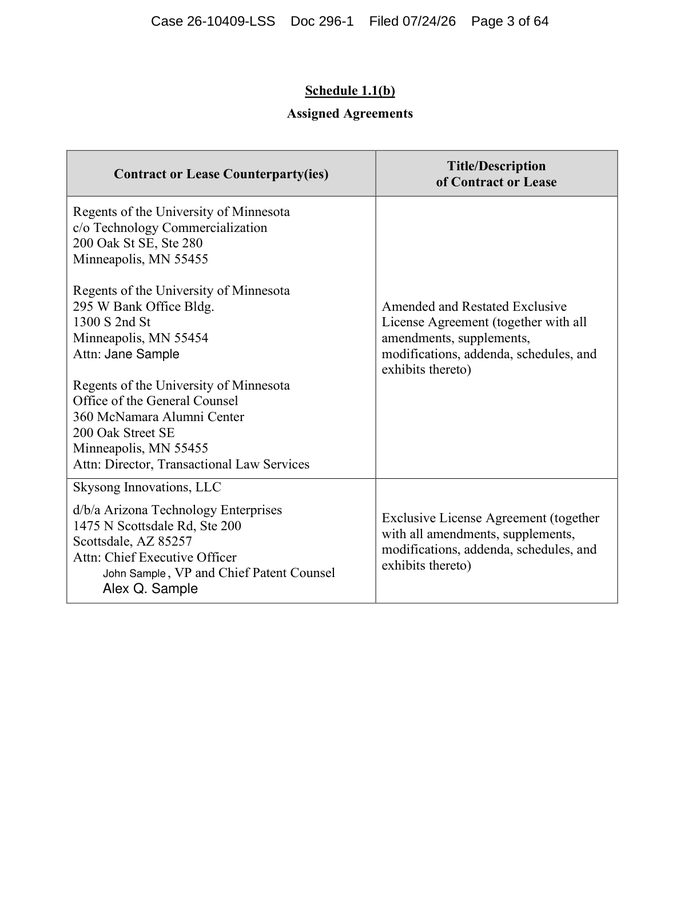 Page 3
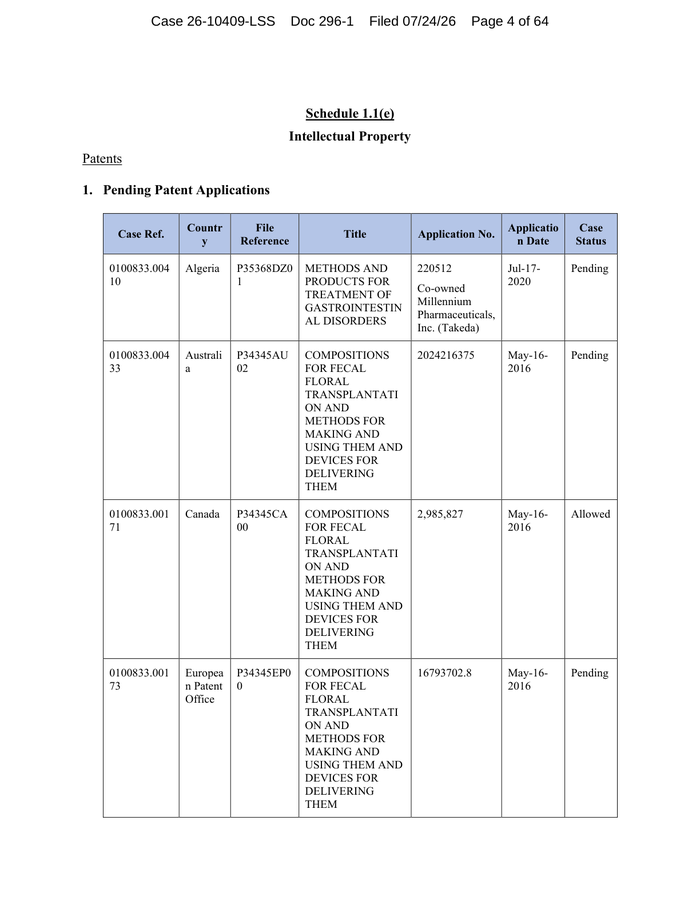 Page 4
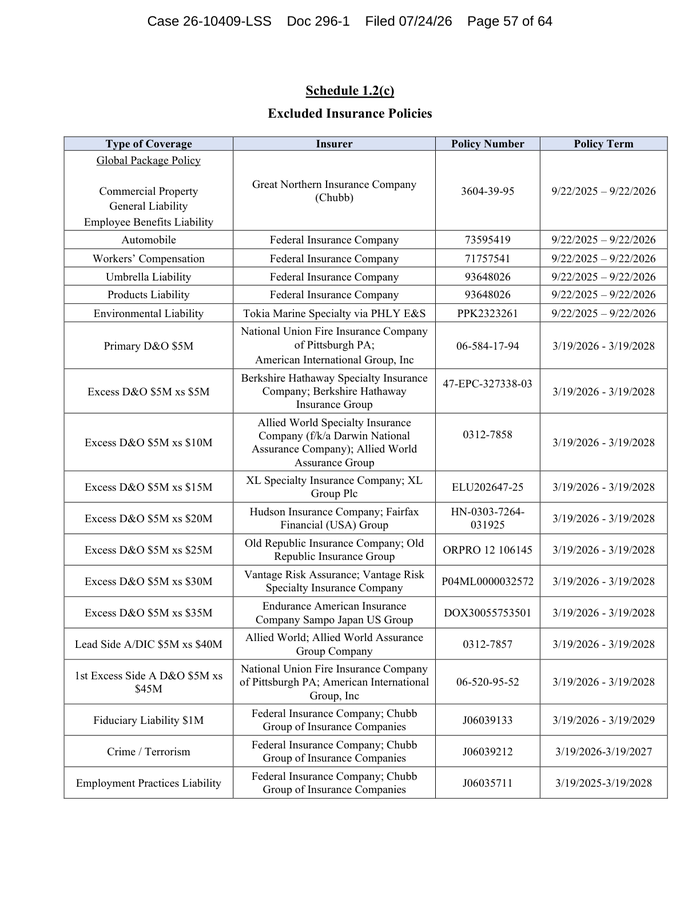 Page 6shown below
Where each value came from
excluded_insurance_policies.title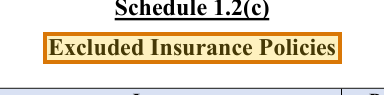
{
  "value": "Excluded Insurance Policies",
  "page": 6,
  "range": {
    "end": 5626,
    "start": 5599
  },
  "box": {
    "xmin": 0.37878,
    "ymin": 0.11575,
    "xmax": 0.62202,
    "ymax": 0.13558
  }
}excluded_insurance_policies.policies[6].policy_number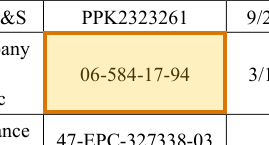
{
  "value": "06-584-17-94",
  "page": 6,
  "range": {
    "end": 6703,
    "start": 6691
  },
  "box": {
    "xmin": 0.62194,
    "ymin": 0.35529,
    "xmax": 0.77146,
    "ymax": 0.40713
  }
}excluded_insurance_policies.policies[6].policy_term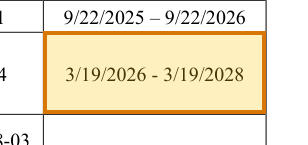
{
  "value": "3/19/2026 - 3/19/2028",
  "page": 6,
  "range": {
    "end": 6733,
    "start": 6712
  },
  "box": {
    "xmin": 0.77146,
    "ymin": 0.35529,
    "xmax": 0.95337,
    "ymax": 0.40714
  }
}excluded_insurance_policies.policies[1].policy_number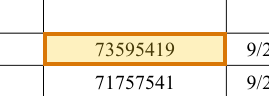
{
  "value": "73595419",
  "page": 6,
  "range": {
    "end": 6014,
    "start": 6006
  },
  "box": {
    "xmin": 0.62193,
    "ymin": 0.25419,
    "xmax": 0.77146,
    "ymax": 0.27466
  }
}
How to try it yourself
Everything on this page is reproducible. The sample, its schema, and the Parse and Extract API outputs are published. You can repeat the same two calls from whichever surface you already build on.
- Claude Skilldescribe the job; the agent writes it
- CLIno code at all
- MCPexpose ADE docs as an agent tool
- REST APIany language
- Pythonlandingai-ade
- TypeScriptlandingai-ade
Documents into data
Accurate
The best accuracy on the difficult documents other tools get wrong, such as messy scans, complicated tables, checkboxes and handwriting.
Auditable
Every answer cites its sources. Values come back with an audit trail (page, bounding box, character range) so a human can review them.
Agentic
Applies multi-step reasoning, and plans before it acts. Handles documents it has never seen before and adapts to variations.
API-first
Composable APIs that drop into any tech stack and can be called from anywhere. Easy to build on and embed in your pipelines and products.
Affordable
Cost-competitive rates with complete price transparency. Spend controls before you run, and every job reports its exact cost.
Enterprise-grade
Built for production and scale from day one. Fully observable and monitored, running securely in our cloud or yours.
Built for high-volume, high-throughput production
- Zero data retention
- Priority rate limits
- Enhanced support
- VPC and on-prem deployment
Available on Team and Enterprise plans. VPC and on-prem deployment require an Enterprise plan.