Extracting data from letters of intent
A buyer's counsel drafts each letter of intent from its own template, setting out a proposed deal before the purchase agreement is written. Deal teams, acquisition lenders and regulators receive them as signed PDFs or scans by email. A roll-up strategy produces one for every add-on target.
A deal team records the buyer, the target, the deal structure, the purchase price, and the due diligence and exclusivity periods. Those values open the deal record in the pipeline CRM, where the exclusivity expiry sets the deadline for diligence and financing.
What makes letters of intent hard
Binding and nonbinding terms mixed
Price and structure are usually nonbinding, while exclusivity and confidentiality bind, and one closing paragraph lists which numbered sections are which.
Deal terms sit inside prose
The price, the diligence period and the exclusivity window each sit in a numbered paragraph of legal prose, qualified by its own conditions.
Executed copies arrive as scans
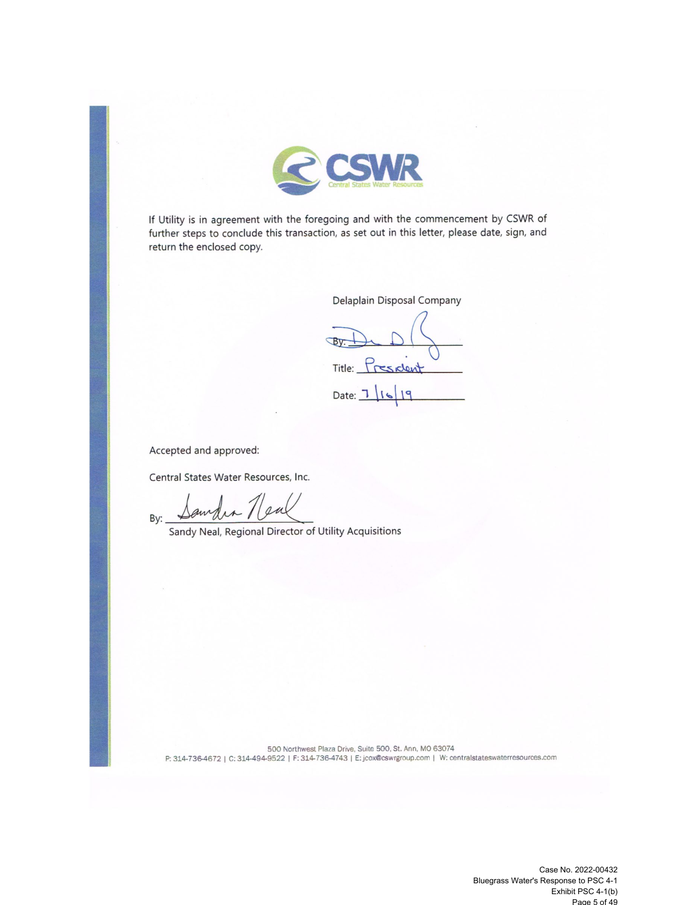
A countersigned letter is often signed in ink and scanned. Signatures and filing stamps then sit over the typed text, and dates may be handwritten.
Parse, extract, verify
Parse
Parse turns the document into reading-order Markdown and a hierarchy of blocks (text, tables, figures), and grounds each block to its exact location on the page.
Extract
You define the fields in a JSON schema, and Extract returns their values in a consistent, structured format, each linked back to where it appears in the Markdown.
Verify
Each value links back to where it appears, down to the character range in the Markdown, and the page and bounding box in the source document, so every result can be verified.
One letter of intent, end to end
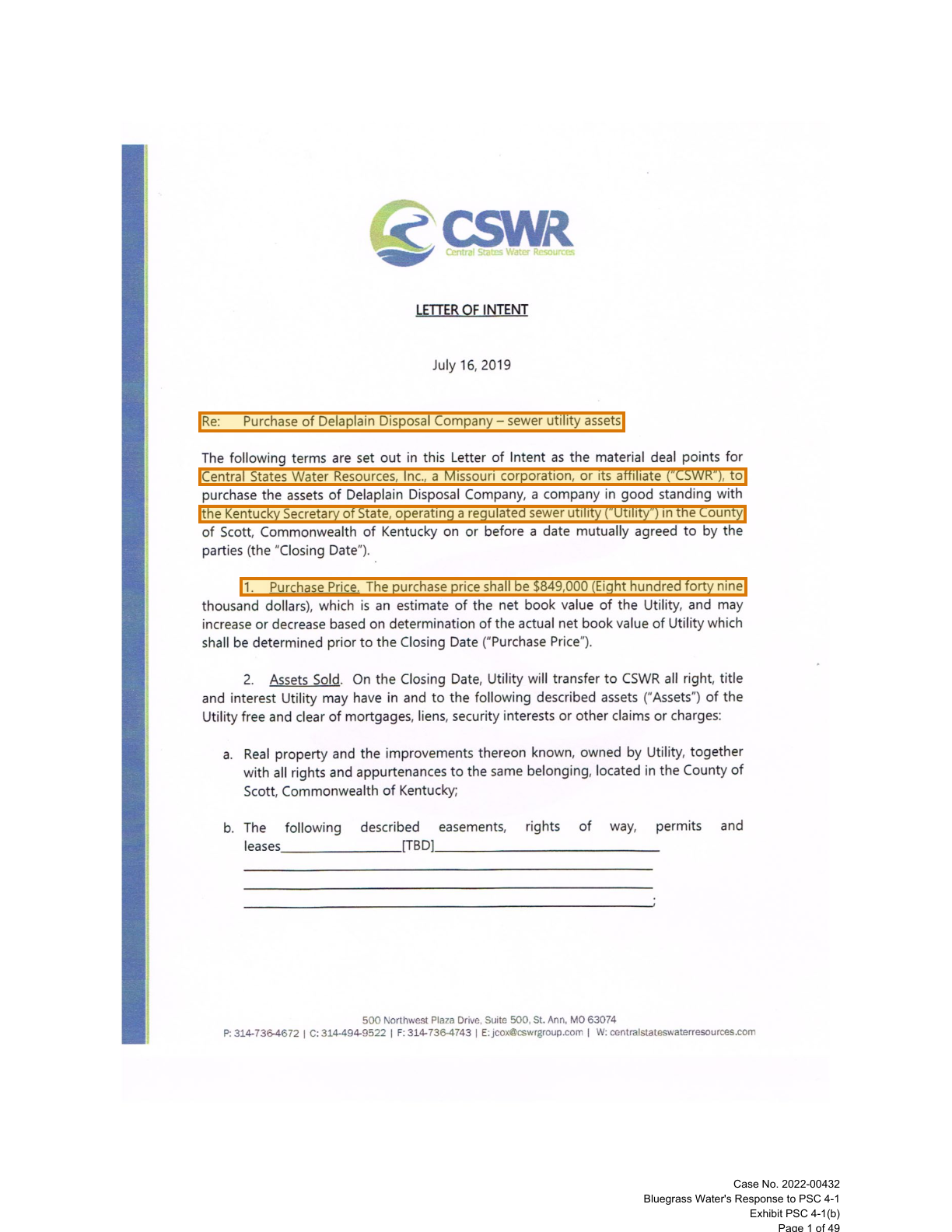
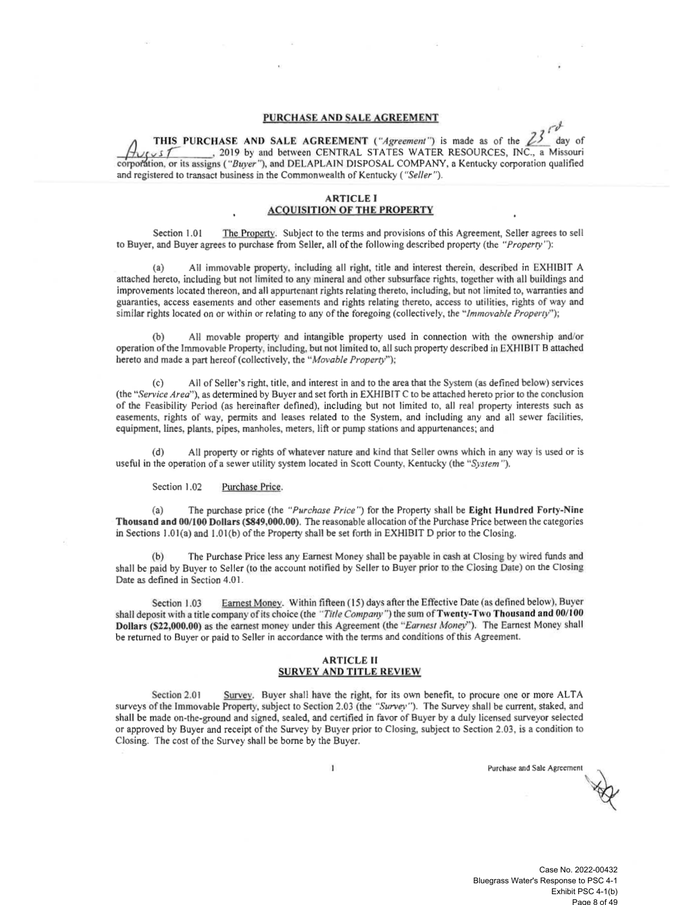
About this document: A letter of intent from a water utility acquirer to buy the assets of a regulated sewer utility in Kentucky. It was filed with the state's Public Service Commission in a 49-page scanned exhibit. The signed and countersigned letter runs five pages. The rest of the exhibit carries two pages of a second letter and the two purchase agreements that followed. Page 1 is featured.
Processing objective: The objective is to capture the deal as the letter proposes it on its first page: who is buying, what is being bought and for how much. A regulator or lender reviewing the acquisition starts from these terms, and each value grounds to its line on the scan.
Demonstration fields: Buyer, Target, Target business, Purchase price
The document
4 of 49 pages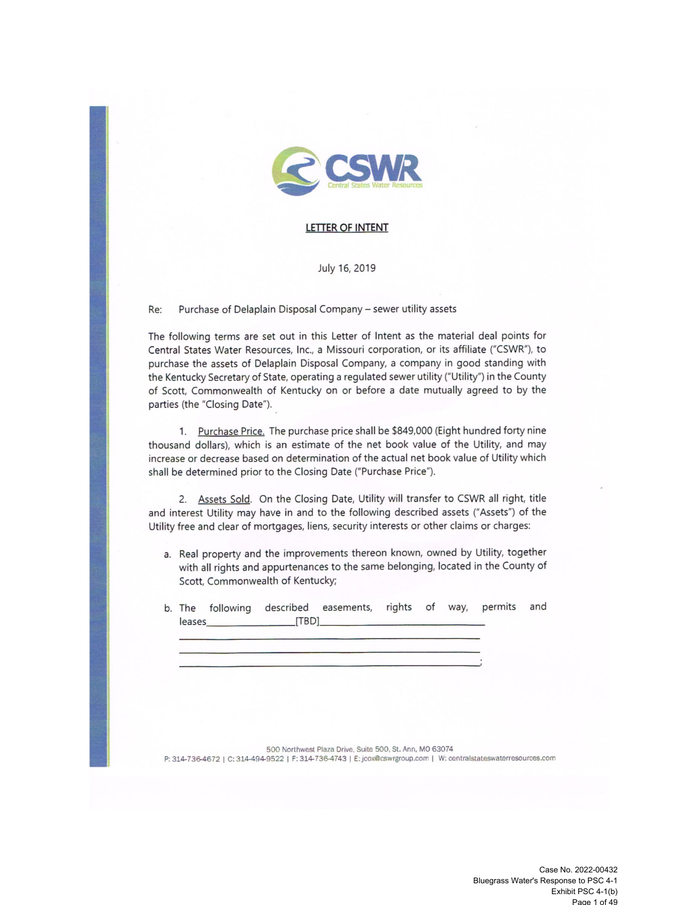 Page 1shown below
 Page 5
 Page 8
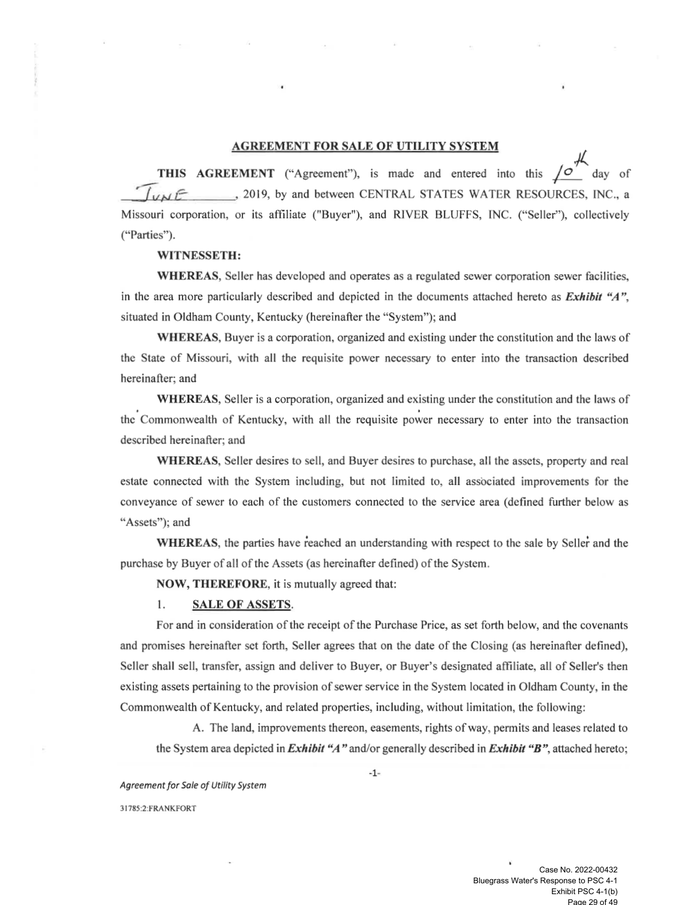 Page 29
Where each value came from
letter_of_intent.buyer_name
{
  "value": "Central States Water Resources, Inc.",
  "page": 1,
  "range": {
    "end": 405,
    "start": 314
  },
  "box": {
    "xmin": 0.20884,
    "ymin": 0.37942,
    "xmax": 0.78449,
    "ymax": 0.39422
  }
}letter_of_intent.target_name
{
  "value": "Delaplain Disposal Company",
  "page": 1,
  "range": {
    "end": 224,
    "start": 159
  },
  "box": {
    "xmin": 0.20849,
    "ymin": 0.33419,
    "xmax": 0.65673,
    "ymax": 0.3504
  }
}letter_of_intent.target_business_description
{
  "value": "regulated sewer utility",
  "page": 1,
  "range": {
    "end": 583,
    "start": 489
  },
  "box": {
    "xmin": 0.20876,
    "ymin": 0.40975,
    "xmax": 0.78416,
    "ymax": 0.42483
  }
}letter_of_intent.purchase_price
{
  "value": 849000,
  "page": 1,
  "range": {
    "end": 777,
    "start": 695
  },
  "box": {
    "xmin": 0.2521,
    "ymin": 0.46884,
    "xmax": 0.78441,
    "ymax": 0.48402
  }
}
How to try it yourself
Everything on this page is reproducible. The sample, its schema, and the Parse and Extract API outputs are published. You can repeat the same two calls from whichever surface you already build on.
- Claude Skilldescribe the job; the agent writes it
- CLIno code at all
- MCPexpose ADE docs as an agent tool
- REST APIany language
- Pythonlandingai-ade
- TypeScriptlandingai-ade
Documents into data
Accurate
The best accuracy on the difficult documents other tools get wrong, such as messy scans, complicated tables, checkboxes and handwriting.
Auditable
Every answer cites its sources. Values come back with an audit trail (page, bounding box, character range) so a human can review them.
Agentic
Applies multi-step reasoning, and plans before it acts. Handles documents it has never seen before and adapts to variations.
API-first
Composable APIs that drop into any tech stack and can be called from anywhere. Easy to build on and embed in your pipelines and products.
Affordable
Cost-competitive rates with complete price transparency. Spend controls before you run, and every job reports its exact cost.
Enterprise-grade
Built for production and scale from day one. Fully observable and monitored, running securely in our cloud or yours.
Built for high-volume, high-throughput production
- Zero data retention
- Priority rate limits
- Enhanced support
- VPC and on-prem deployment
Available on Team and Enterprise plans. VPC and on-prem deployment require an Enterprise plan.