Extracting data from vehicle inspection reports
Independent inspection firms and auction houses each print their own vehicle condition report, with their own component lists and rating scales. Auto lenders and insurers order them vehicle by vehicle, so volume follows the number of vehicles a team finances or insures. Reports arrive as PDFs from inspection portals and as email attachments.
Underwriting and collateral review need the make, model, model year, odometer reading and the rating for each component. A loan origination system adjusts the collateral value for mileage and condition, and a policy administration system records existing damage as the baseline for later claims.
What makes vehicle inspection reports hard
Rating scales differ by inspector
One firm rates each component Very Good, Good or As Expected, and an auction house grades the whole vehicle on a numbered scale.
Rating rows grouped under sections
Condition tables run across pages, grouped under section headings, and each row pairs a component with its rating and a written finding.
Measurements print in local units
Odometers print kilometers or miles, tread depth millimeters or 32nds of an inch, and the unit sits in a column header or each cell.
Parse, extract, verify
Parse
Parse turns the document into reading-order Markdown and a hierarchy of blocks (text, tables, figures), and grounds each block to its exact location on the page.
Extract
You define the fields in a JSON schema, and Extract returns their values in a consistent, structured format, each linked back to where it appears in the Markdown.
Verify
Each value links back to where it appears, down to the character range in the Markdown, and the page and bounding box in the source document, so every result can be verified.
One vehicle inspection report, end to end
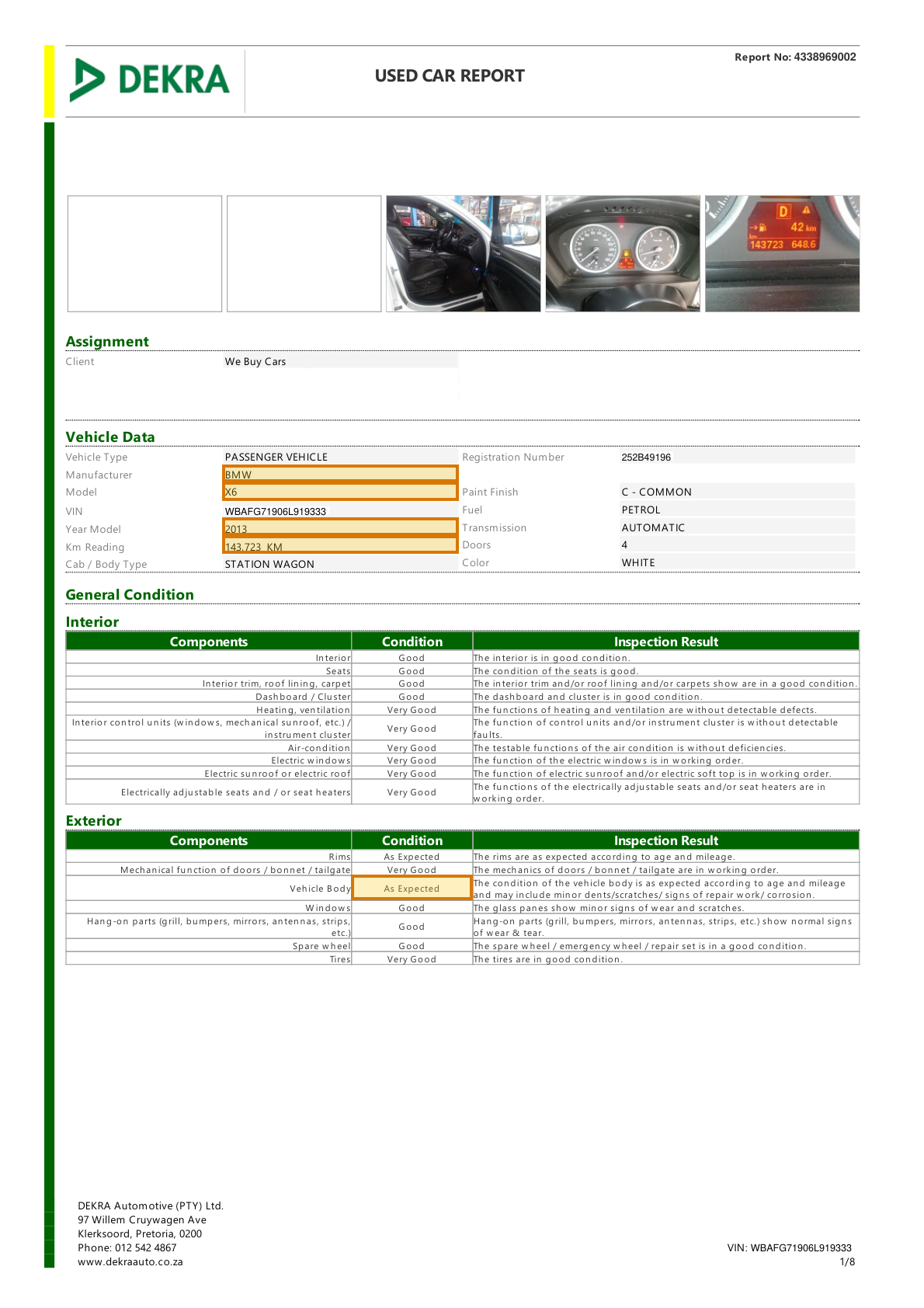
About this document: A used car condition report from DEKRA Automotive in South Africa, prepared for the dealer We Buy Cars. It runs to three portrait pages. Page 1, featured here, carries the vehicle data block and the interior and exterior rating tables. Page 2 adds mechanical ratings, a brake test and a tire table, and page 3 holds the inspector's comments. Identifying numbers and the technician's name were replaced with stand-ins.
Processing objective: The objective is to capture which vehicle was inspected, how far it has traveled and what the inspector found on its body. The odometer reading prints with a thousands separator and a unit, and comes back as a whole number of kilometers. The body rating comes from one row of the exterior condition table.
Demonstration fields: Manufacturer, Model, Model year, Odometer (km), Vehicle body condition
The document
3 of 3 pages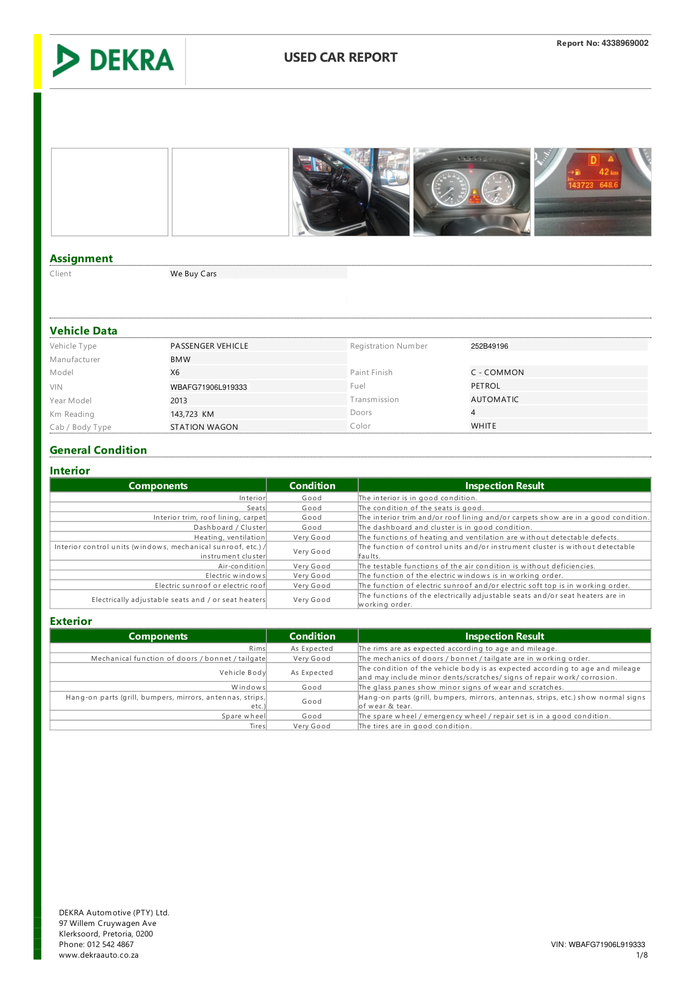 Page 1shown below
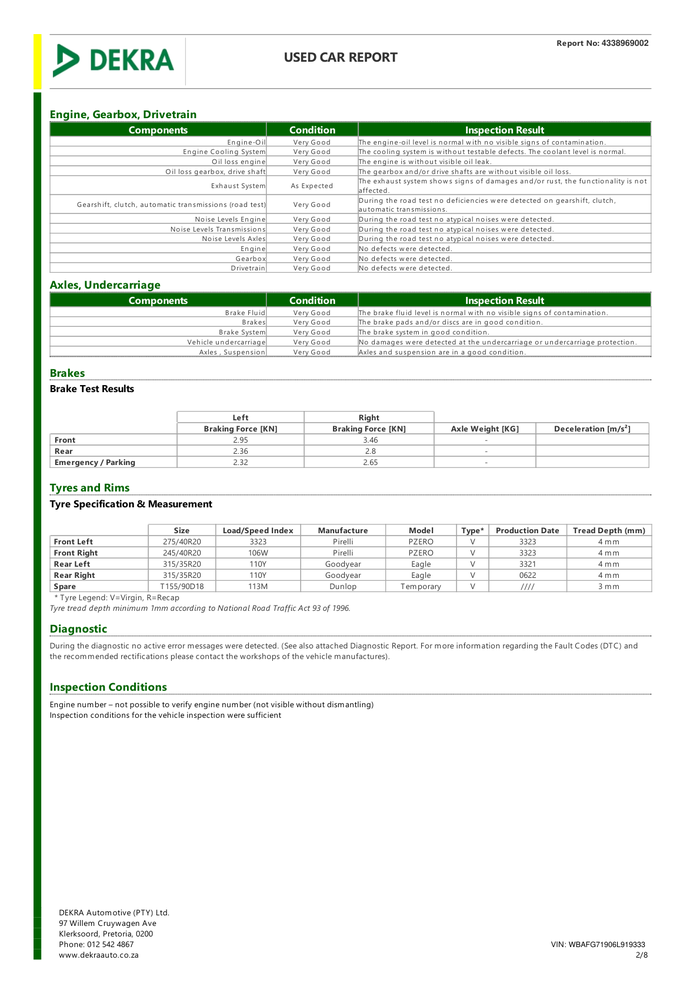 Page 2
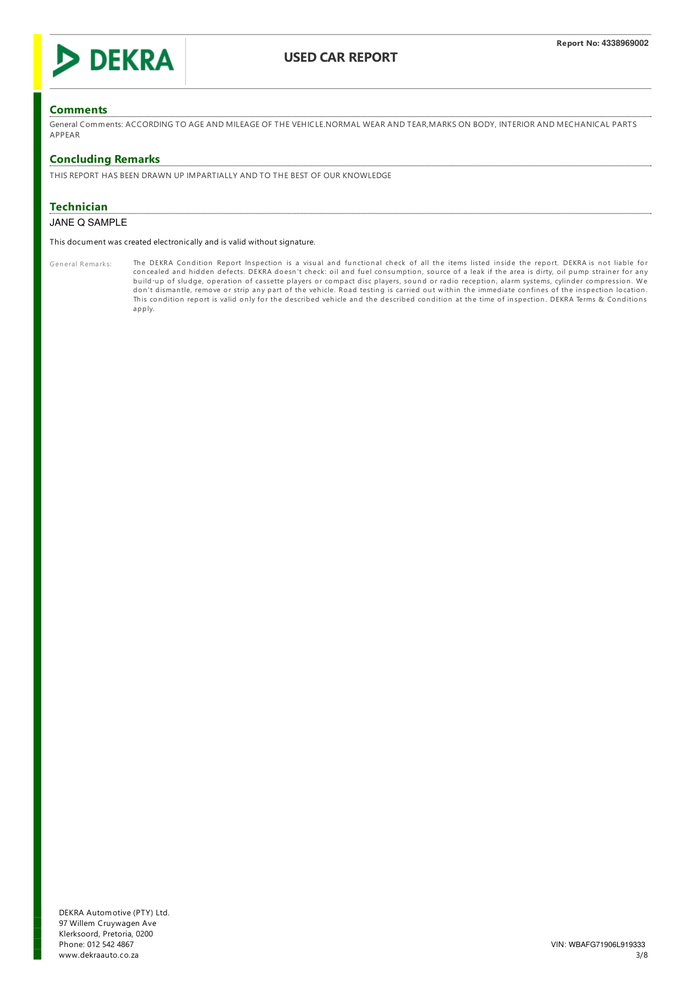 Page 3
Where each value came from
vehicle.manufacturer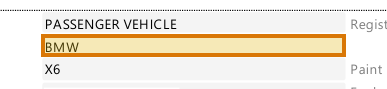
{
  "value": "BMW",
  "page": 1,
  "range": {
    "end": 939,
    "start": 936
  },
  "box": {
    "xmin": 0.24113,
    "ymin": 0.35533,
    "xmax": 0.49648,
    "ymax": 0.36832
  }
}vehicle.model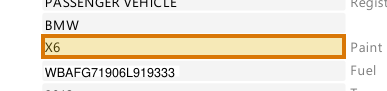
{
  "value": "X6",
  "page": 1,
  "range": {
    "end": 992,
    "start": 990
  },
  "box": {
    "xmin": 0.24103,
    "ymin": 0.36832,
    "xmax": 0.49646,
    "ymax": 0.38252
  }
}vehicle.model_year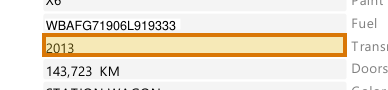
{
  "value": 2013,
  "page": 1,
  "range": {
    "end": 1150,
    "start": 1146
  },
  "box": {
    "xmin": 0.24083,
    "ymin": 0.39606,
    "xmax": 0.49642,
    "ymax": 0.40971
  }
}vehicle.odometer_km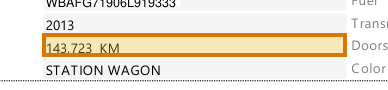
{
  "value": 143723,
  "page": 1,
  "range": {
    "end": 1237,
    "start": 1227
  },
  "box": {
    "xmin": 0.24074,
    "ymin": 0.40963,
    "xmax": 0.4964,
    "ymax": 0.42332
  }
}component_ratings[12].condition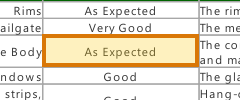
{
  "value": "As Expected",
  "page": 1,
  "range": {
    "end": 3247,
    "start": 3236
  },
  "box": {
    "xmin": 0.38006,
    "ymin": 0.66882,
    "xmax": 0.51142,
    "ymax": 0.68803
  }
}
How to try it yourself
Everything on this page is reproducible. The sample, its schema, and the Parse and Extract API outputs are published. You can repeat the same two calls from whichever surface you already build on.
- Claude Skilldescribe the job; the agent writes it
- CLIno code at all
- MCPexpose ADE docs as an agent tool
- REST APIany language
- Pythonlandingai-ade
- TypeScriptlandingai-ade
Documents into data
Accurate
The best accuracy on the difficult documents other tools get wrong, such as messy scans, complicated tables, checkboxes and handwriting.
Auditable
Every answer cites its sources. Values come back with an audit trail (page, bounding box, character range) so a human can review them.
Agentic
Applies multi-step reasoning, and plans before it acts. Handles documents it has never seen before and adapts to variations.
API-first
Composable APIs that drop into any tech stack and can be called from anywhere. Easy to build on and embed in your pipelines and products.
Affordable
Cost-competitive rates with complete price transparency. Spend controls before you run, and every job reports its exact cost.
Enterprise-grade
Built for production and scale from day one. Fully observable and monitored, running securely in our cloud or yours.
Built for high-volume, high-throughput production
- Zero data retention
- Priority rate limits
- Enhanced support
- VPC and on-prem deployment
Available on Team and Enterprise plans. VPC and on-prem deployment require an Enterprise plan.